Frequently Asked Questions
What is shopping data?
Shopping data are the records collected through loyalty cards—like the Sainsbury’s Nectar Card, Boots Advantage Card, or Tesco Clubcard. When you swipe your card, it stores a record of the items you’ve bought and builds a picture of the products you buy.
These schemes were originally designed for marketing, helping businesses send you personalised offers or discounts. But this same information can also be incredibly valuable for health research. We use shopping data to help us understand patterns in diet, lifestyle, and wellbeing across the population.
🎥 Check out this video for more information on what shopping data is.
What information is in my shopping data?
Your data includes the items you bought when you used your loyalty card—things like food, drinks, toiletries, and household products. It also includes the date and time of your shop, the store you visited, and how much money you spent.
It does not include your bank details or payment card information.
How is my data used?
Your shopping data is used to help us understand patterns in diet and health across large groups of people. Researchers look at trends—like how often certain foods are bought or how shopping habits change over time—to answer important questions about public health.
Sometimes, we combine (or link) your shopping data with other information you’ve agreed to share, such as health records or survey responses. This helps create a fuller picture of lifestyle and health, always done securely and with your permission.
What kind of research questions do you answer?
- 🍏What are people eating?
We can look at the types of foods and drinks people buy over time to understand diet and nutrition trends across the population. - 🍷How do people buy alcohol, tobacco, or medicines?
Shopping data can show patterns in the purchase of products that affect health, helping us spot trends and potential areas for intervention. - 💊How do shopping habits relate to health?
With your permission, we can link shopping data to health records to see how what people buy relates to health outcomes. - ⏱️How do behaviours change over time?
By tracking purchases month by month or year by year, we can see how shopping habits change seasonally, or in response to policy changes, like the sugar tax. - 🌍Are there differences between groups of people?
Data can help identify how shopping behaviours vary between communities, helping make research and public-health efforts more fair and effective.
How do you collect my data?
We collect your data through data donation. This means you choose to share your loyalty card information with us for research.
You give permission for your shopping data to be securely transferred from the retailer to our research team. Nothing is collected automatically — you stay in control of what you share.
How is my data stored and protected?
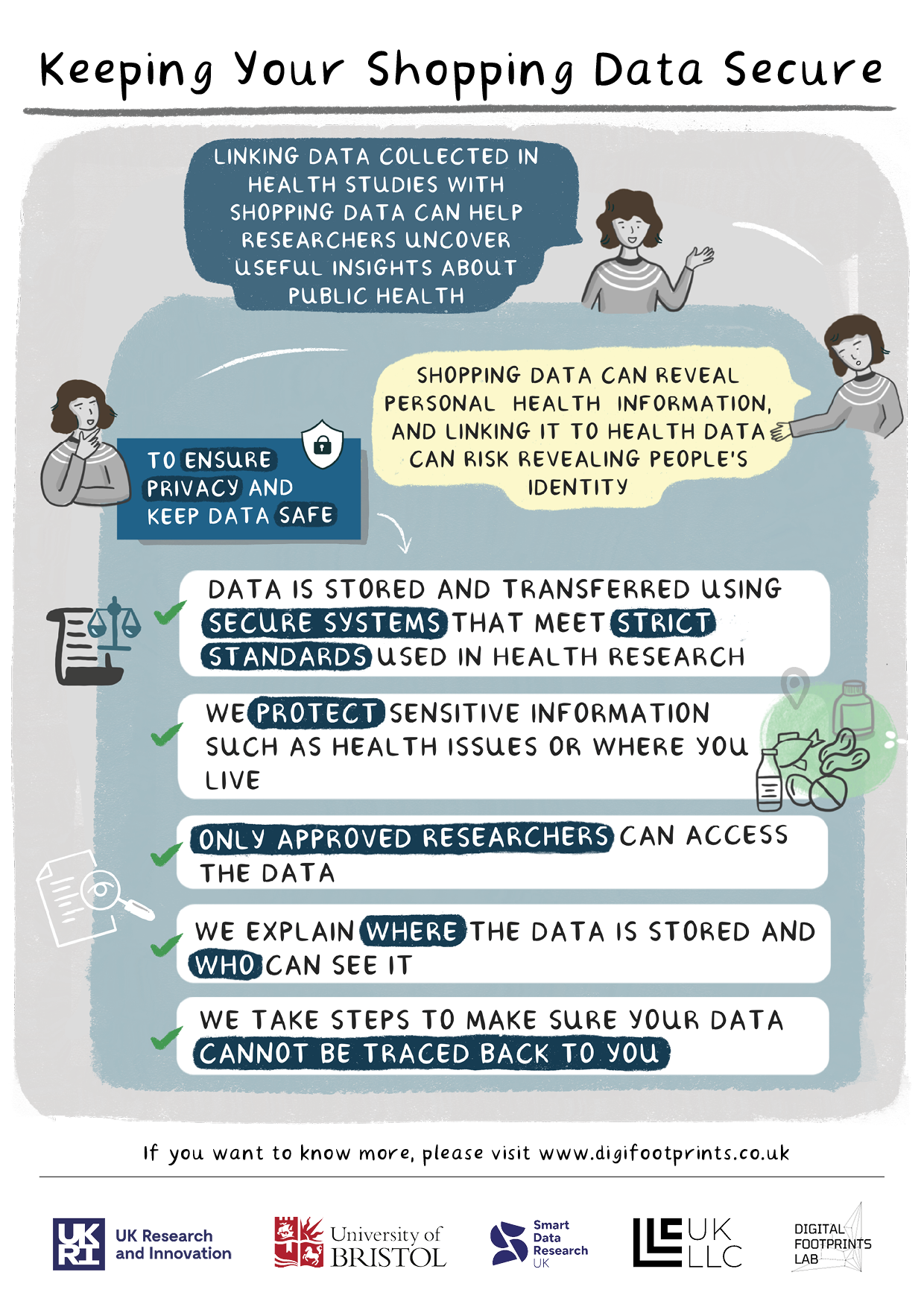
We anonymise records so no one can tell which data belongs to which person, and we remove sensitive information like addresses.
📊 Check out this infographic to learn more about how we protect your data.
Will you use my data without my permission?
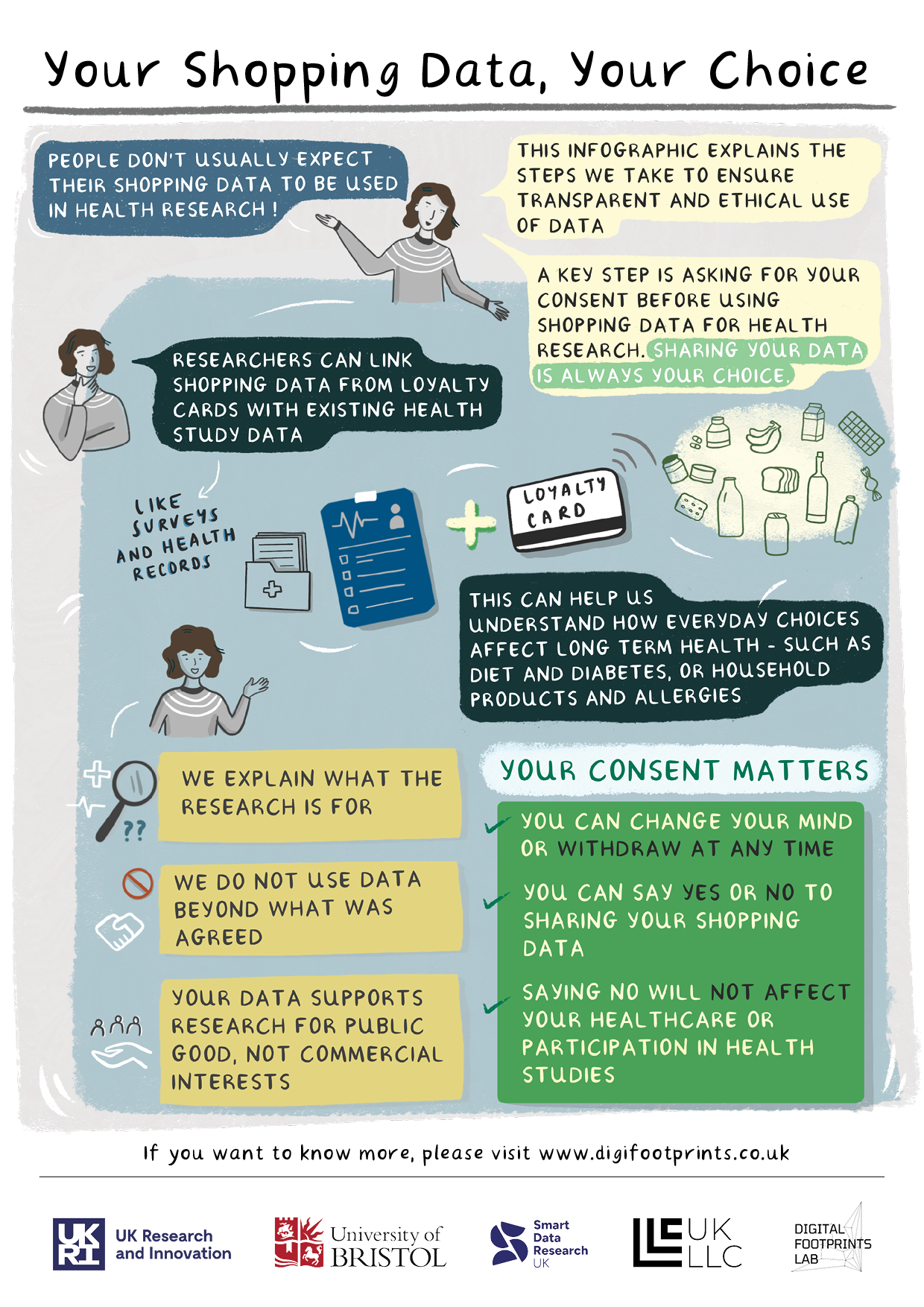
No — we will not use your data without your permission. We only work with data that people have explicitly agreed to share for research.
📊 Check out this infographic for more information on consent.
Where can I read more?
Well, luckily we have written quite a few blogs about our work over the years!
📝 Check out this blog for a more broad overview of using digital footprint data for health research, including example studies, the value of linking these data to other records, and how we are working to collaborate effectively with industry and politicians.
📝 Check out this article for a more detailed look into data donation, specifically: what it is, how many people are happy to donate their data, and what questions are still yet unanswered.
 English